
Last updated November 17, 2026
 Hardwood
 Engineered hardwood
 Luxury vinyl plank
 Laminate
 Porcelain tile
 Carpet
 Shaw
 Mohawk
 COREtec
 Pergo
Free in-home measure and written estimate: Shaw, Mohawk, COREtec and Pergo lines compared on your own rooms, with carpet, tile, vinyl plank, laminate and hardwood laid out side by side
Get your free estimateFlooring Installation Questions to Ask Before You Sign
Asking a flooring contractor if they’re insured tells you almost nothing useful. Every legitimate installer carries coverage, and the answer is always yes. Asking what they do when they pull up existing tile and find a soft spot in the subfloor tells you everything. That question forces them to describe how they handle discovery, who authorizes added scope, and how a job that grows stays priced and documented instead of turning into a verbal shrug and a bigger final invoice. In this guide, the team at Paradise Flooring Installation walks through the technical and contractual questions that separate a prepared installer from a hopeful one, the answers that reveal real competence, and the ones you should treat as warning signs before you sign.
Quick Answer
The flooring questions worth asking before you sign are the ones that test process, not credentials: how the installer handles hidden subfloor damage, which installation method they’ll use on your specific slab or subfloor and why, whether the same crew starts and finishes the job, how the material warranty, workmanship warranty, and retailer guarantee stack up, and what the callback process looks like if something shifts in the first year. Get specific answers in writing on the estimate, and you’ve protected yourself far more than a handshake and a license card ever will.
Styles & brands we work with
- Hardwood
- Engineered hardwood
- Luxury vinyl plank
- Laminate
- Porcelain tile
- Carpet
- Shaw
- Mohawk
- COREtec
- Pergo
Table of Contents
- What happens when hidden subfloor damage turns up?
- Which installation method will they use on your floor, and why?
- Will the same crew start and finish your job?
- How do the warranties actually stack?
- What’s the protocol after installation?
- Why brand access matters when you’re choosing materials
- What should a written estimate actually contain?
What happens when hidden subfloor damage turns up?
The single best predictor of how a flooring job will go is what an installer says when you ask: “What if you pull up my existing floor and find damage you didn’t expect?” The weak answer is “we’ll fix it.” The strong answer names the process. In our experience across carpet, tile, and hardwood refinishing work, surprises under the finished floor are common, and how they get handled separates a disciplined operation from one that improvises mid-project.
Here’s what a solid answer sounds like, broken into its parts:
- They stop and document. A good installer photographs the damage, marks its extent, and doesn’t keep moving forward until you’ve seen it. You should hear the words “we’ll show you” rather than “we’ll just take care of it.”
- They separate repair from installation scope. Subfloor repair, patching, and leveling are added scope. A professional prices them separately and clearly, not folded into a revised total you can’t unpack.
- They get your written authorization before proceeding. You sign or initial an addendum that spells out the new work and the new cost. No verbal approvals that vanish into a text thread.
- They explain the options. Sometimes a soft spot can be patched and bridged. Sometimes a section of subfloor needs replacement. Sometimes an underlying moisture issue needs to be addressed before any new floor goes down. You should hear the trade-offs, not just one price.
Ask directly: “Who authorizes additional work, and how do you price it?” The answer should be “you do,” and it should be in writing. This matters in any market, but in a desert climate like ours where slabs and subfloors can develop cracks and settlement issues over time, it comes up more than homeowners expect. At Paradise Flooring Installation, we build the estimate so any discovery scenario has a clear path: see it, price it, get your sign-off, proceed.
Which installation method will they use on your floor, and why?
Installation method is where a homeowner can catch a shortcut before it happens. Two installers can quote the same material at the same price and be planning entirely different jobs underneath. The method should be chosen for your specific slab or subfloor, your material, and your climate, not applied as a default.
Luxury vinyl plank over a concrete slab
Floating versus glue-down is the first real question. Floating installations are fast and forgiving and work well over many surfaces, but they depend on a flat, sound substrate, and click-lock seams can telegraph small imperfections over time. Glue-down installations bond directly and can be the right call over certain slabs or where the floor needs to stay put under heavy loads or temperature shifts. The answer you want isn’t a slogan, it’s a reason specific to your floor. If you’re considering a COREtec or LifeProof plank over concrete, ask the installer to walk you through their flatness check and the specific method they recommend and why.
Hardwood over plywood
Nail-down versus staple is the classic choice. Both fasten solid wood to a wood subfloor, but the fastener type, the spacing, and the subfloor prep that precede them change how quiet the floor stays and how movement is managed. An installer who can explain why they use one over the other on your specific subfloor is showing you their craft.
Tile
Tile is less about the fastening and more about the substrate. The prep, the underlayment, and the layout planning are where a tile job is won or lost. Ask how the installer handles layout planning, whether they dry-lay the tile before setting, and how they treat transitions and thresholds.
Whatever the material, the question is the same: “Tell me the method you’ll use and how you chose it for my floor.” An installer who has a real answer has done this many times. If you’re weighing materials, our tile flooring installation page covers the tile side of the decision in more depth, and our carpet installation page covers the soft-surface side.
Will the same crew start and finish your job?
Though it rarely gets asked, this question protects you more than almost any other. On a single-room refresh it’s academic; on a whole-home project it matters a great deal. When different crews hand off a big job mid-stream, small but important things fall through the cracks: the layout someone planned in the living room, the transition someone else misread, the seam placement nobody carried over from the first room to the last.
Ask directly: “Who is on my job on day one, and is it the same people on the final day?”
- Same crew throughout means the person who planned the layout is accountable for the result, and any correction flows back to the same hands.
- Hand-offs to a new crew are sometimes unavoidable on very large projects, but they need a clear plan for continuity: layout notes, a lead on the final day, and one person accountable for the whole job.
- Subcontracted crews aren’t automatically bad, but the warranty of workmanship should sit with the company you signed the contract with, not with an individual crew that finishes and moves on.
At Paradise Flooring Installation, a whole-home project is a single contract with one company coordinating the sequence across carpet, tile, and refinishing. Our technicians have up to 11 years of experience, and one of the reasons we’ve structured jobs this way is that continuity of craft is what protects the finished floor. The floor your space has been waiting for is one finished by the same hands that planned it.
How do the warranties actually stack?
Warranty layering confuses nearly everyone, so ask the question plainly: “Which warranty covers which failure?” Most flooring warranties come in three separate layers, and each covers a different kind of failure.
- The manufacturer’s material warranty covers defects in the flooring product itself, such as delamination or a defect in the wear layer or construction. It does not cover installation errors, and it’s often voided if the product wasn’t installed to spec.
- The installation workmanship warranty covers how the floor was put down: gaps, lifting, tenting, failed seams, and the like. This is the warranty the installer is responsible for, and it’s the one to get in writing with a clear duration and a clear list of what’s covered.
- Any retailer or seller guarantee is a separate layer, and it usually covers things moving through the seller’s hands. Ask exactly what it promises.
The key question: “If a plank gaps at a seam in six months, whose warranty covers it, and if a wear-layer defect shows up in a year, whose warranty covers that?” The answer should distinguish the two cases and name the responsible party. And a clean install matters for more than a decade of peace of mind: maintain the floor as the installer recommends, and both layers stay intact.
If you’re installing a premium vinyl plank such as COREtec or LifeProof, or a major-brand product like Mohawk or Pergo, the material warranty is often the strongest layer of the three. The workmanship warranty is the one you should demand in writing, with duration and scope spelled out on the estimate.
What’s the protocol after installation?
Now comes a set of questions most homeowners don’t think to ask until after the trucks have gone: how soon can furniture go back, how should the floor be cleaned in the early days, and what happens if something shifts in the first year? A prepared installer will have a clear answer to all three before they leave.
The first days
Wood floors need time before heavy furniture returns, and the timing depends on the product and the finish; the manufacturer’s instructions and your estimate should set the exact window. Newly finished hardwood in particular needs its cure time respected. Tile and vinyl typically accept light traffic sooner, but “sooner” is not a guess, it’s stated in the product guidance.
Cleaning in the first 30 days
Ask what not to use on the new floor during the first month. Harsh cleaners, excessive water, and abrasive tools can affect a fresh finish or an adhesive. The right answer is specific: which cleaner, how much moisture, and what to avoid. A good installer leaves you a written care list.
The callback process
Ask: “If a seam lifts, a tile cracks, or a board shifts within the first year, what do I do?” The answer should be a clear process, a phone number, and a defined timeline for review. Workmanship issues within the warranty period should trace back to the installer, not get bounced to the manufacturer. That’s how the warranty layers actually work in practice, and a company that can explain its callback process is a company that stands behind its work.
At Paradise Flooring Installation, we walk through this protocol at the estimate and again after installation. Call Paradise Flooring Installation at (844) 651-6528 to schedule your free estimate, and we’ll walk you through the whole sequence before you commit.
Why brand access matters when you’re choosing materials
This one is less about questions than about leverage. The brands an installer works with tell you a lot about the range of options available to you, and it affects every question above, because the material you choose sets the installation method, the warranty layers, and the post-install care.
Paradise Flooring Installation installs and works with products from nine recognized brands, including Shaw, Mohawk, COREtec, Pergo, LifeProof, Mannington, Armstrong, Daltile, and Karndean. That’s a range that spans performance-first products and design-forward options in one place, so you don’t have to compromise on style to get the durability you need, or the reverse.
A few practical reasons this matters:
- One installation team, one accountable relationship. With nine trusted brands under one installation team, you’re not coordinating a separate installer for every material you fall in love with.
- Premium vinyl categories are handled well. Karndean and COREtec installations alongside mainstream brands signal fluency in premium luxury vinyl, a category many budget installers skip entirely.
- Tile access includes professional-grade lines. Daltile is a professional-grade tile line not typically sold through retail channels, which closes the gap between showroom selection and job-site execution.
Ask the installer: “Which brands do you install, and have you installed my chosen product before?” A real answer shows depth, not just a brand name on a brochure.
What should a written estimate actually contain?
The estimate is the contract in miniature, and it’s where nearly every dispute is either prevented or created. A strong flooring estimate isn’t just a price; it’s a scope document that answers most of the questions above in writing. Before you sign, confirm the estimate includes:
- Material specifications: brand, product, color, and quantity, with any overage spelled out.
- Installation method: the method for your specific substrate, and the prep work it requires.
- Subfloor handling: what’s included, and the pricing mechanism for additions discovered mid-job.
- Removal and disposal: whether tear-out of the old floor and haul-away are included or extra.
- Warranty terms: workmanship warranty duration and scope, plus a note on the material warranty.
- Schedule: the estimate is free, with the install day booked after you approve, so the written estimate should make the sequence clear.
- Change-order process: how additional scope gets authorized and priced, in writing.
Read every line, and ask about anything vague. An estimate that answers these on paper is worth more than a lower number that doesn’t. For homeowners in Paradise, a written estimate that also reflects our local slab and subfloor realities is the starting point, and we’re glad to walk you through it line by line.
Common Mistakes to Avoid
- Asking only about insurance and licensing. Every legitimate installer carries coverage, so the question reveals little. Ask about subfloor discoveries, methods, and warranty layers instead, where competence actually shows.
- Accepting a verbal quote. Without material specs, method, and warranty terms on paper, a mid-job surprise has no agreed mechanism for handling it. Get it in writing.
- Not asking who authorizes added scope. If the answer isn’t “you do, in writing,” you’ve handed over control of the budget. Clarify the change-order process before work starts.
- Assuming the crew stays the same. On large jobs, hand-offs happen; ask who’s accountable and how continuity is planned. Layout and seam quality depend on it.
- Treating warranties as a single guarantee. Material, workmanship, and seller guarantees cover different failures. Ask which one applies to a gapped seam versus a wear-layer defect.
- Skipping the post-install questions. Furniture timing, cleaning restrictions in the first 30 days, and the callback process are all things you’ll wish you’d asked before the trucks left.
- Ignoring the estimate’s fine print. Removal, disposal, prep, and overage can live in the margins. Read them, and ask about anything that isn’t clear before signing.
See the difference
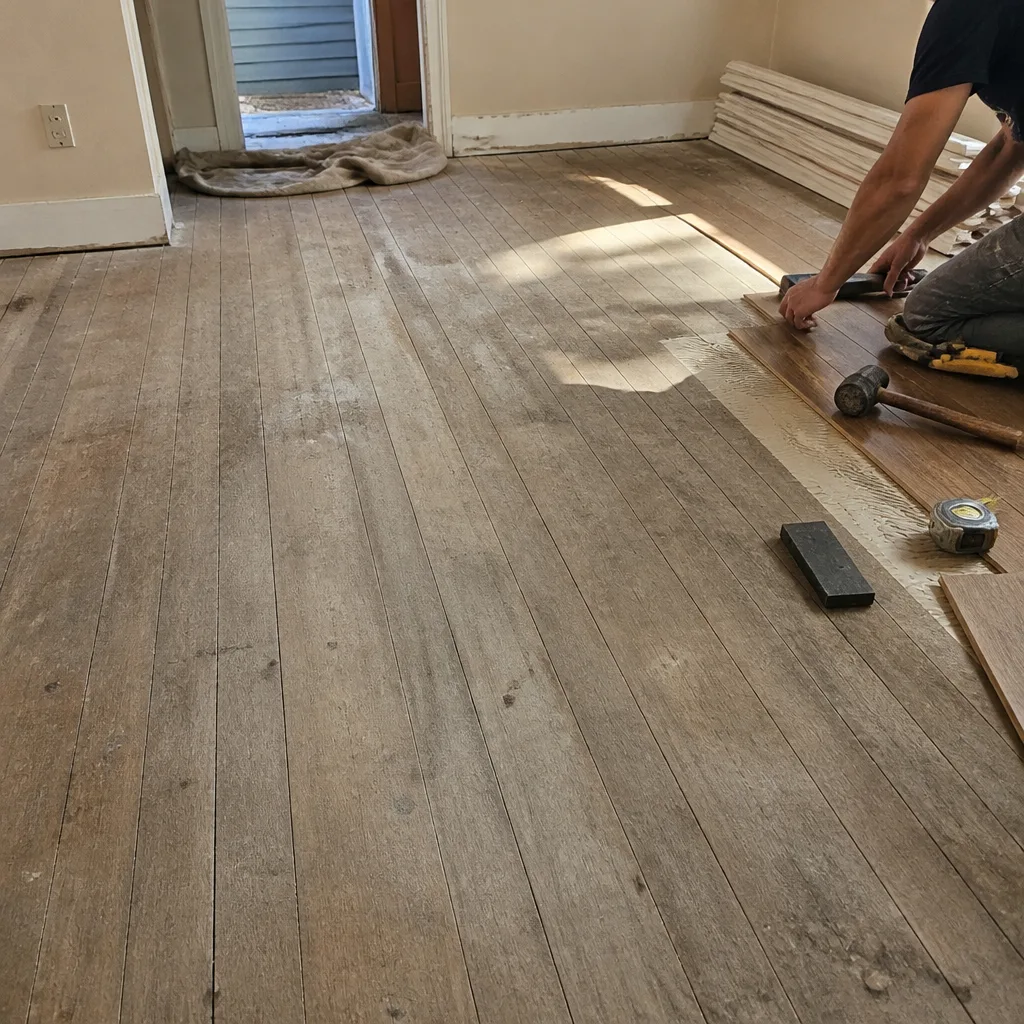 Before
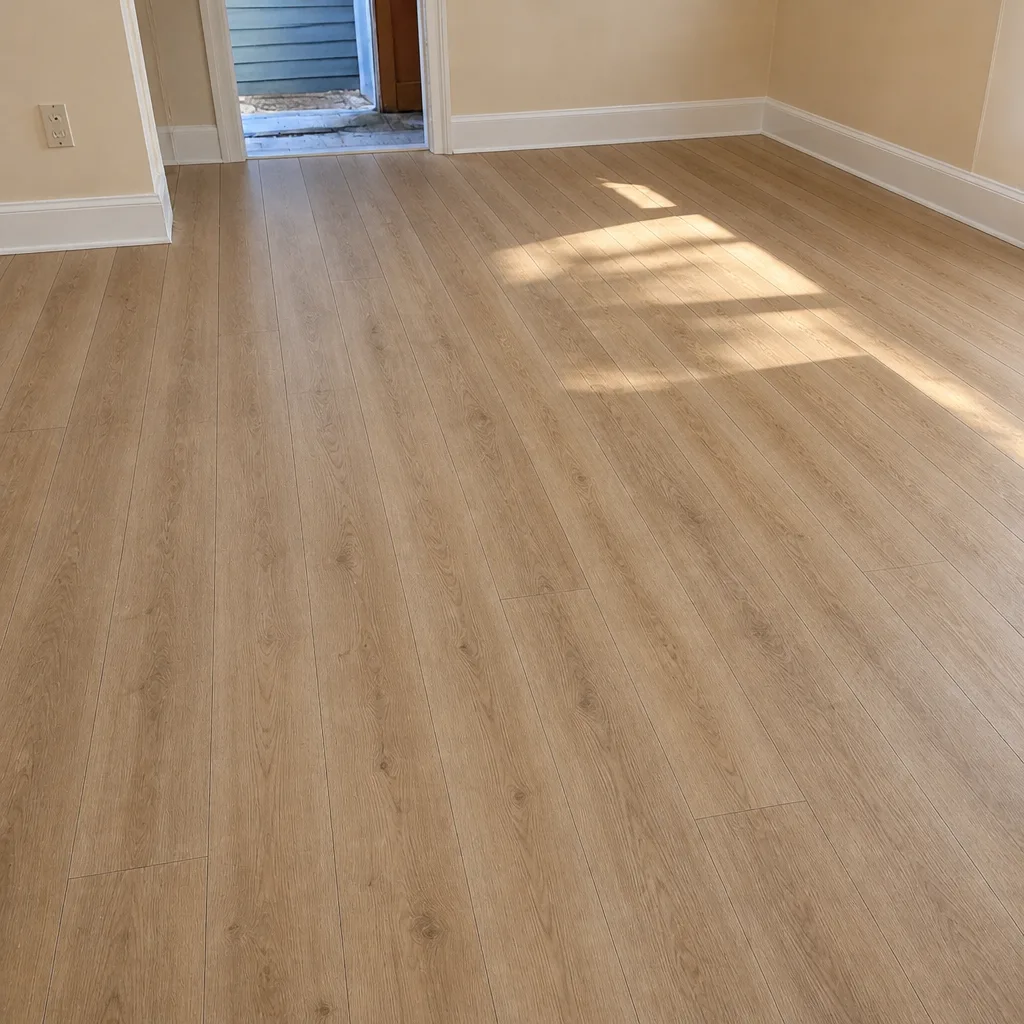 After
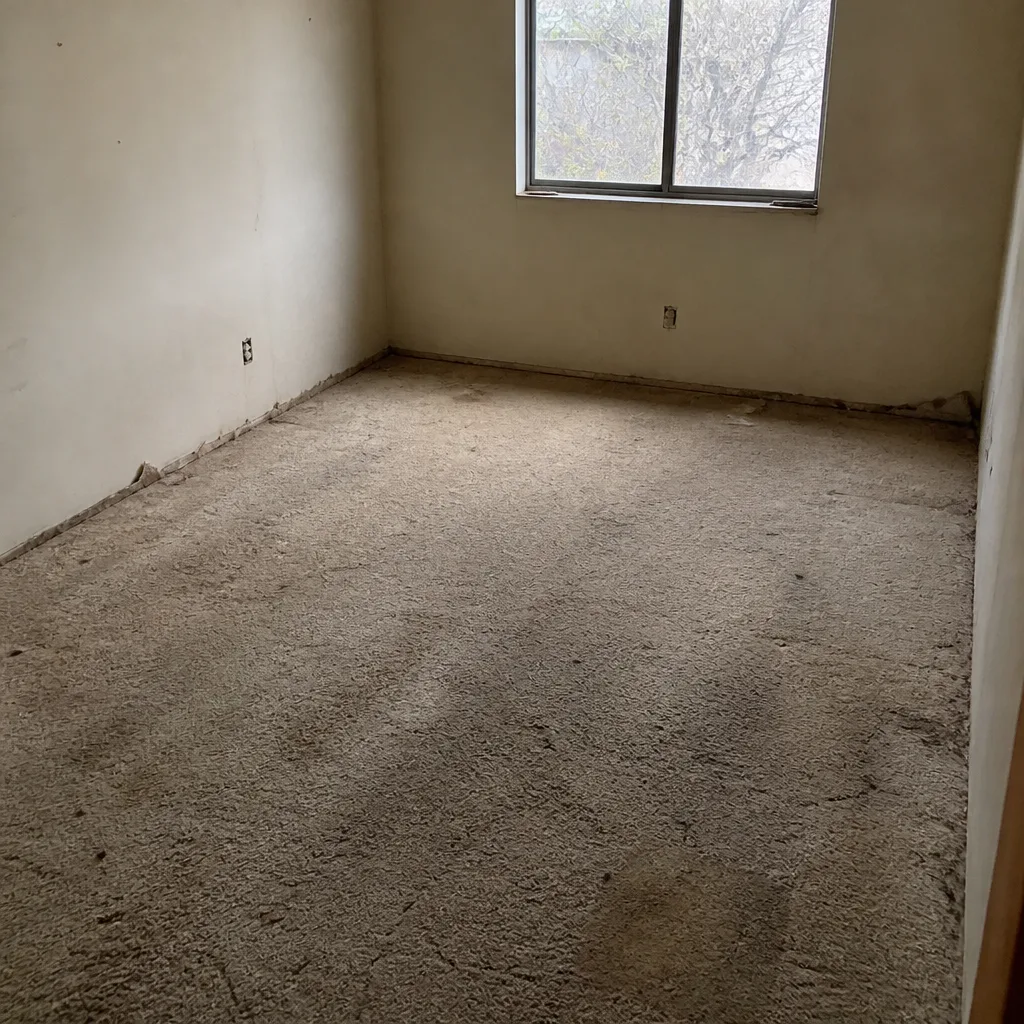 Before
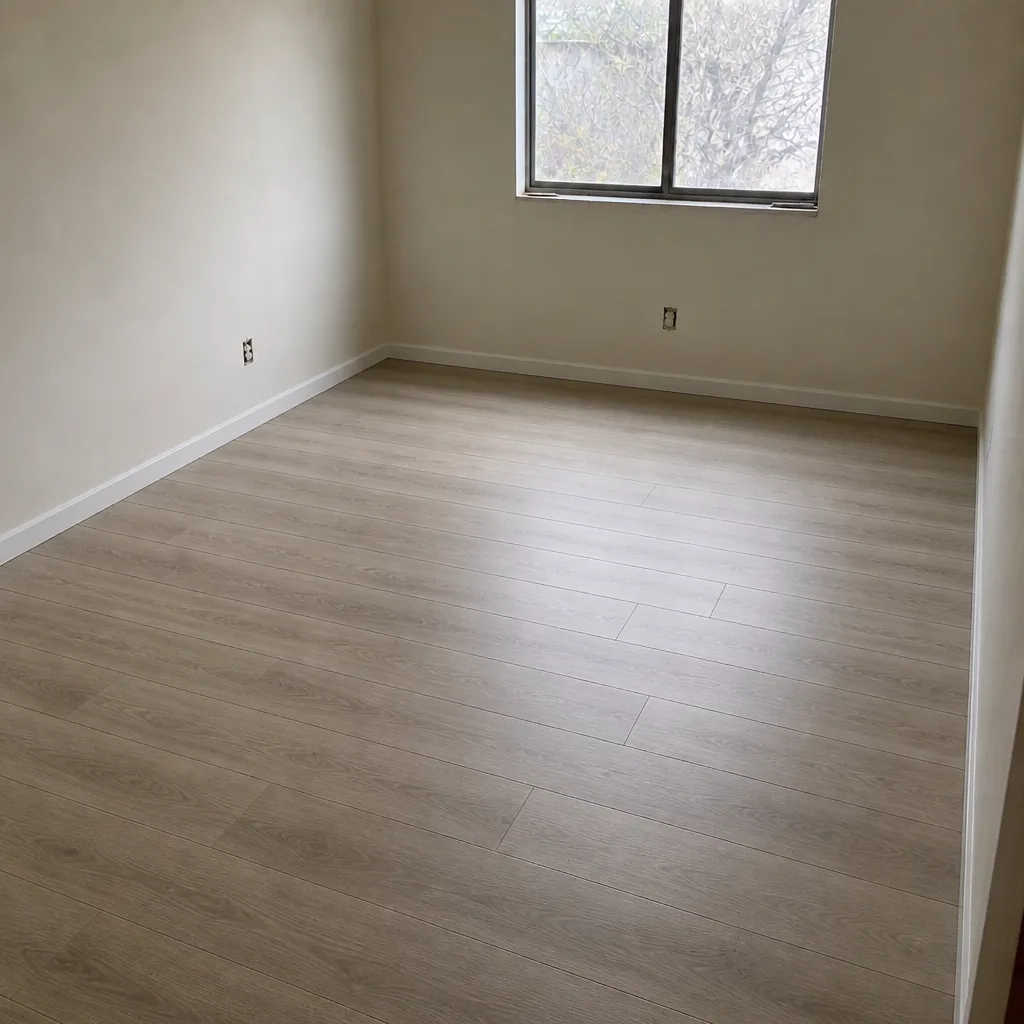 After
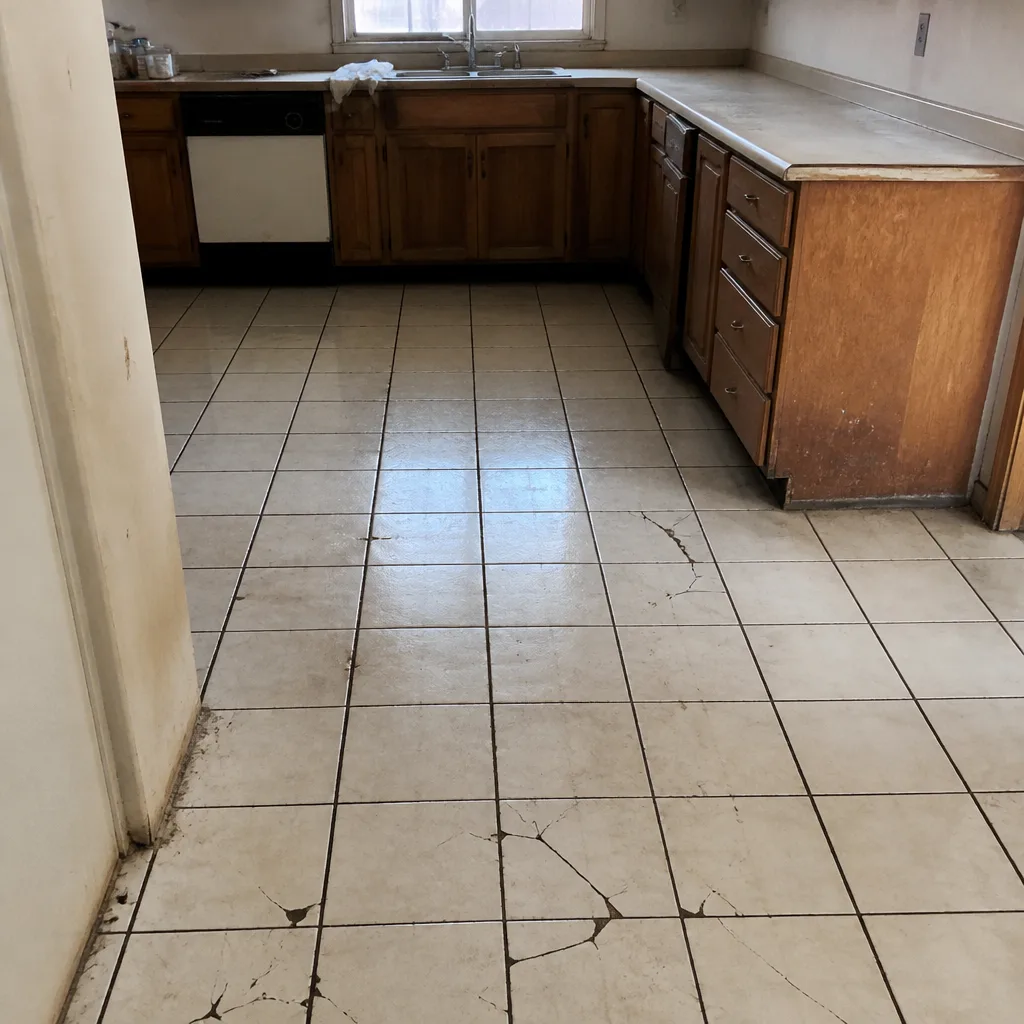 Before
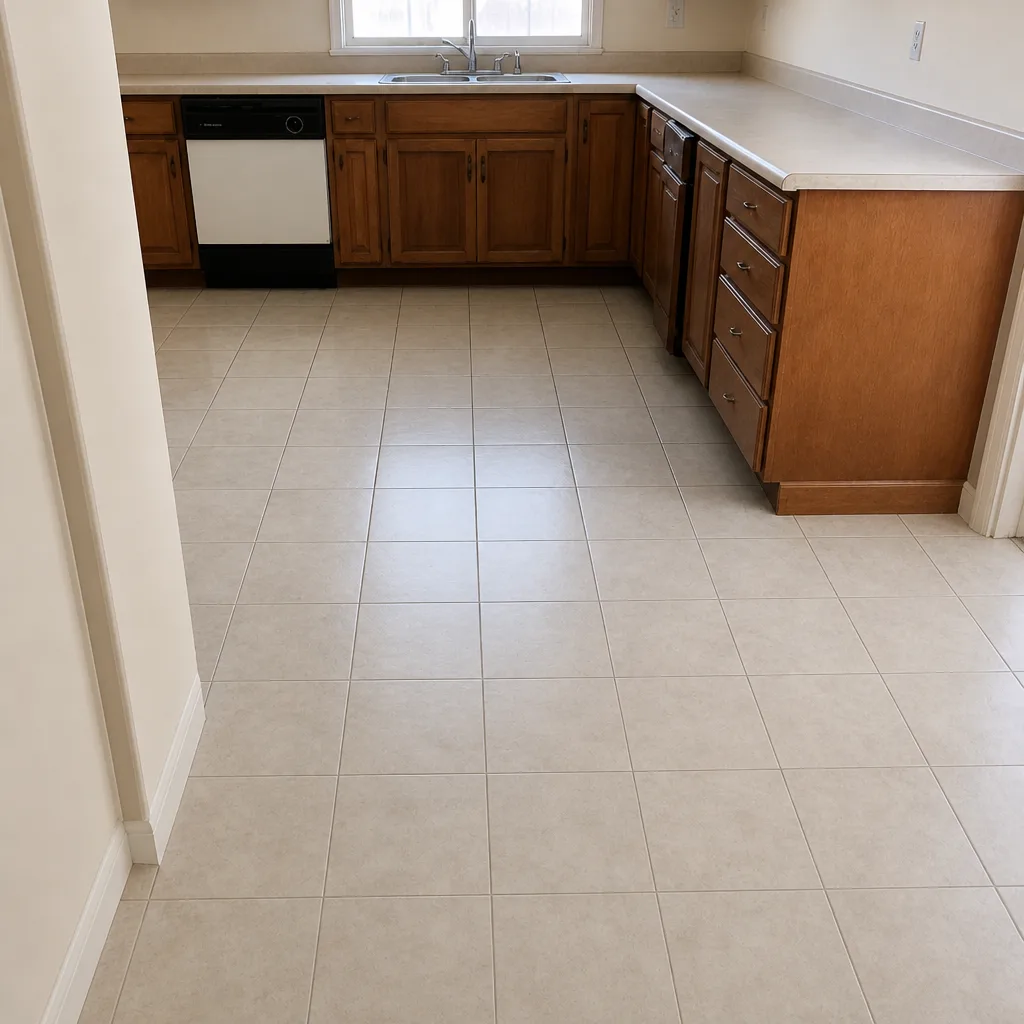 After
When to Call a Professional
Some flooring questions are too specific to answer in a guide. Call us when you’re weighing materials and want to see the actual range of options, when you’re dealing with a subfloor you’re unsure about, when you’re planning a whole-home project across carpet, tile, and refinished hardwood and don’t want to coordinate multiple contractors, or when a warped plank, a lifted seam, or a cracked tile needs someone to come look at it in person. Subfloor conditions in particular deserve a trained eye, because what’s under the floor determines the method, the prep, and the price.
Paradise Flooring Installation offers free estimates in Paradise, and the written estimate sets the price before any work begins. Call (844) 651-6528 to schedule yours. We answer 24/7. Fast dispatch from 7am to 7pm, Sunday through Friday.
Frequently Asked Questions
Ask how they handle unexpected subfloor damage, which installation method they’ll use on your specific substrate and why, whether the same crew starts and finishes the job, how the material and workmanship warranties cover different failures, and what the callback process looks like in the first year. These five questions reveal more than any license or insurance check.
A prepared installer stops, documents the damage, prices the repair separately from the installation, and gets your written authorization before proceeding. It should never be a verbal “we’ll take care of it” folded silently into the final bill. Ask before signing how additional scope is authorized and priced.
Yes. The estimate is free, and the written quote sets the final price before work begins. You’ll get a detailed scope that covers material specs, installation method, subfloor handling, removal and disposal, warranty terms, and the change-order process. Call (844) 651-6528 to schedule your free estimate. Call (844) 651-6528. We answer 24/7. Fast dispatch from 7am to 7pm, Sunday through Friday.
We install and work with products from nine recognized brands: Shaw, Mohawk, COREtec, Pergo, LifeProof, Mannington, Armstrong, Daltile, and Karndean. That range covers carpet, tile, and hardwood categories, so you get performance-first and design-forward options in one place, installed by one team. Our technicians have up to 11 years of experience.
Ask the installer to put the workmanship warranty in writing with its duration and its scope, separate from the material warranty. A gapped seam or a lifted plank is a workmanship issue. A wear-layer defect is a material issue. A strong installer can explain which warranty applies to which scenario before you sign.
It depends on the material and the finish, and the exact timing is set by the product guidance and your written estimate. Refinished hardwood needs its full cure time respected, while tile and vinyl typically accept light traffic sooner. Ask for the specific window for your floor, plus a list of cleaners to avoid in the first 30 days. For an exact timeline, call (844) 651-6528; estimates are free.
The Bottom Line
The questions that protect you before you sign a flooring contract are the ones that probe process, not paperwork. Ask how hidden subfloor damage is handled, which installation method fits your slab or subfloor, whether the same crew finishes what it starts, how the warranty layers cover different failures, and what the callback protocol looks like in the first year. Get the answers on the estimate, in writing, and you’ve done more to protect the finished floor than any amount of comparing prices ever will.
Paradise Flooring Installation installs carpet, tile, and hardwood refinishing across a nine-brand portfolio, including COREtec, LifeProof, Mohawk, and Pergo. Call (844) 651-6528 to schedule your free estimate. We answer 24/7. Fast dispatch from 7am to 7pm, Sunday through Friday.
Written by the team at Paradise Flooring Installation.