
Last updated November 17, 2026
 Hardwood
 Engineered hardwood
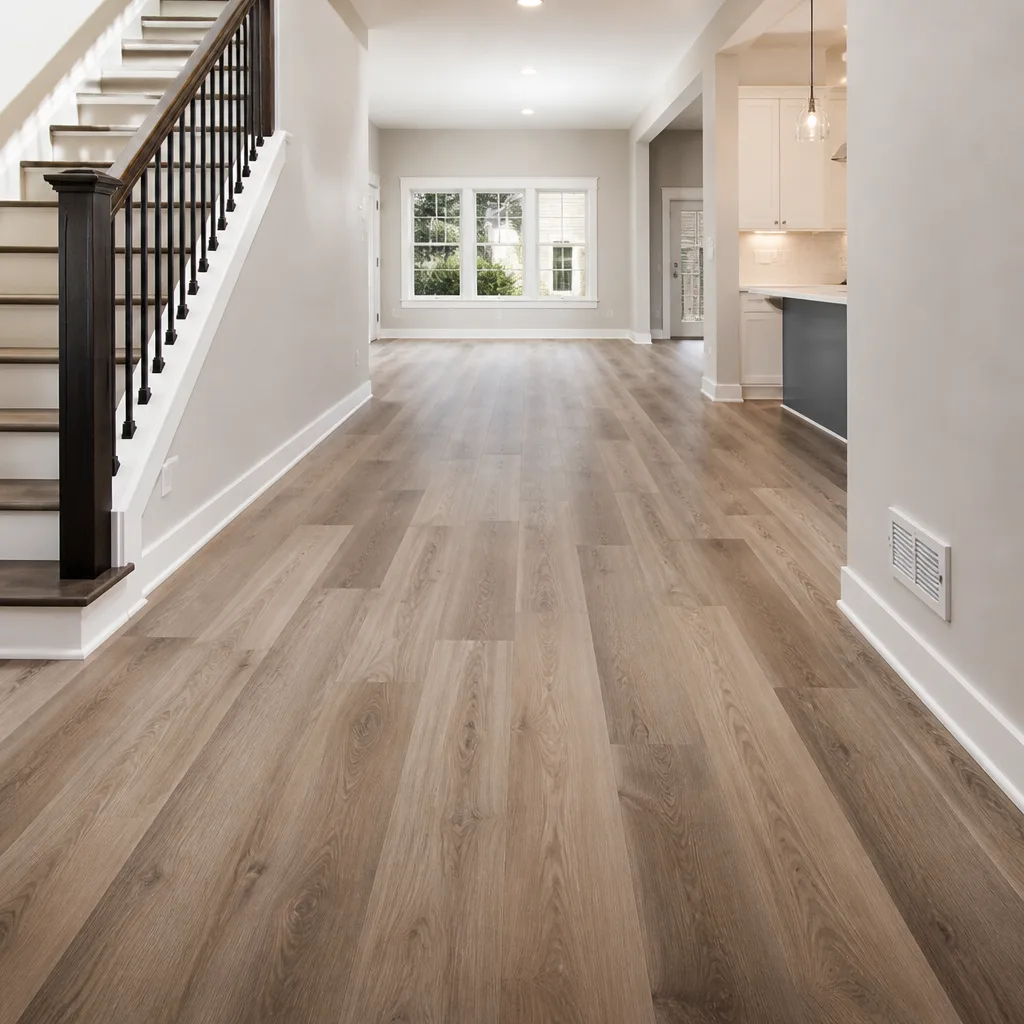 Luxury vinyl plank
 Laminate
 Porcelain tile
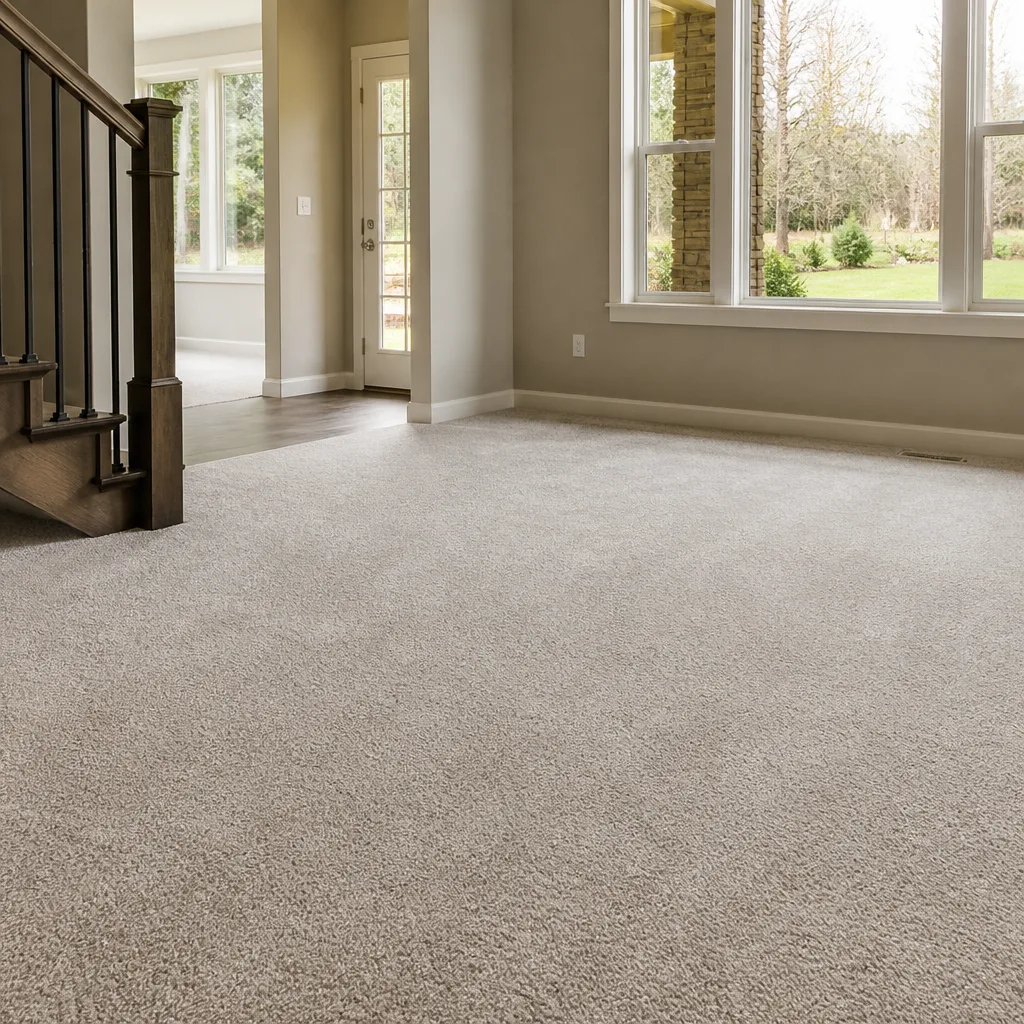 Carpet
 Shaw
 Mohawk
 COREtec
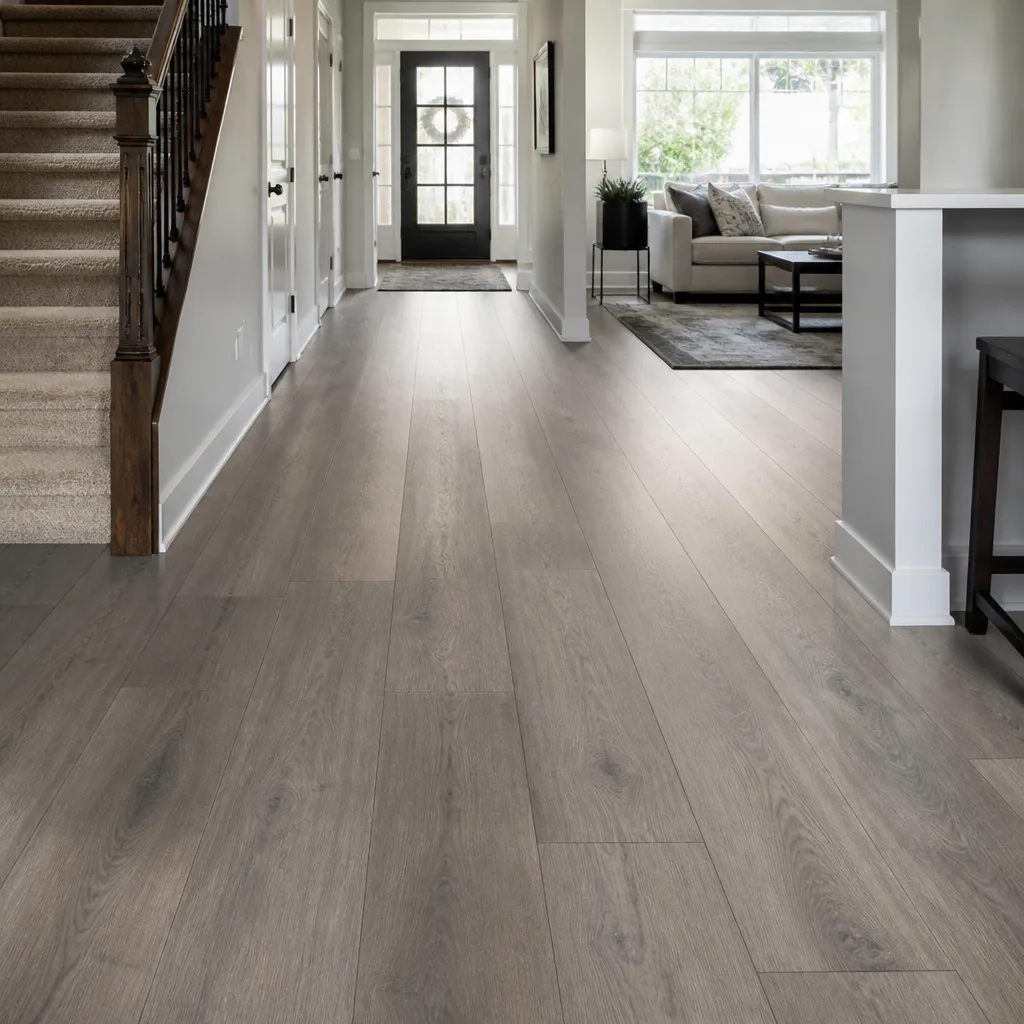 Pergo
Free in-home measure and written estimate: Shaw, Mohawk, COREtec and Pergo lines compared on your own rooms, with carpet, tile, vinyl plank, laminate and hardwood laid out side by side
Get your free estimateHow to Hire a Flooring Contractor in Paradise: A Step-by-Step Guide
A flooring contractor can hold a valid Nevada license and still have never installed a nail-down hardwood floor over a concrete slab. The license proves the company is bonded and legally allowed to work. It says nothing about whether the person standing in your living room has actually laid the material you picked. That gap is where most hiring mistakes happen. This guide gives you a process, not a checklist: how to verify a contractor in two minutes, what to ask a tile installer versus a hardwood finisher, how to read a bid for the line items that get quietly left out, and how to write a contract that protects you if the subfloor turns out worse than anyone expected. If you’re planning a flooring project in Paradise, we wrote this so you can vet any company, including us.
Quick Answer
To hire a flooring contractor in Paradise, verify the company holds a Nevada C-15 floor covering license through the State Contractors Board, ask material-specific questions about your exact subfloor and product, and demand a written bid that itemizes subfloor prep separately from installation. The right contractor will answer all three before you sign anything.
Styles & brands we work with
- Hardwood
- Engineered hardwood
- Luxury vinyl plank
- Laminate
- Porcelain tile
- Carpet
- Shaw
- Mohawk
- COREtec
- Pergo
Table of Contents
- Step 1: Verify the Nevada License (Takes Two Minutes)
- Step 2: Ask Material-Specific Questions
- Step 3: Get Subfloor Prep in Writing
- Step 4: Know Who Actually Swings the Hammer
- Step 5: Watch for Red Flags Specific to the Paradise Market
- Step 6: Structure a Contract That Survives Surprises
- Step 7: The Refinishing Question Most Homeowners Skip
- Step 8: Compare Bids Fairly
Step 1: Verify the Nevada License (Takes Two Minutes)
Nevada separates contractor licensing by trade, and flooring falls under the C-15 classification, known as Floor Covering. A C-15 license covers carpet, tile, wood flooring, and resilient flooring installation. It is not the same as a general building license, and a company holding an A or B license is not automatically qualified to install flooring. Ask for the classification, not just the license number.
Verification happens through the Nevada State Contractors Board, which maintains a public lookup. You enter the license number or the company name and the record shows the classification, the license status, and whether it is active or expired. Two minutes at a keyboard tells you whether the company bidding on your job is actually allowed to do the work. Do this before the estimate visit, not after. A company that dodges the question or gives you a number that comes back to a different trade classification has told you what you need to know.
Two details homeowners often miss:
- A license is issued to a company, not a crew. When you verify, confirm the license matches the company name on the bid, not a subcontractor’s.
- Bonding and insurance are part of the licensing framework. Ask the company to produce a certificate of insurance showing active general liability coverage, and confirm the certificate names the company you’re hiring.
The rest of this guide assumes you have verified the basics. What follows is the part the licensing lookup can’t answer: whether this particular installer knows your particular floor. That’s the real work of hiring in Paradise, because the market here has genuine range in skill level, and the paperwork looks the same on both sides of the gap.
When you’re ready to see how a dedicated installer handles that conversation, Paradise Flooring Installation starts every project with a free, no-pressure estimate.
Step 2: Ask Material-Specific Questions
Flooring is not one trade. A tile setter, a hardwood finisher, and a carpet layer use different tools, different skills, and different floors of their brains. The right questions differ by material. Ask the wrong ones and a generalist will answer smoothly without knowing whether they can actually deliver.
What to Ask a Tile Installer
Tile is unforgiving. A poorly set tile job fails at the edges and in the grout lines, and those failures show up months later. Ask how the installer preps the substrate, because a tile floor over a concrete slab in Paradise’s climate needs a level, properly bonded surface. Ask about layout: where the cuts fall, whether the tile is centered on the room, how they handle doorways and thresholds. Ask about grout selection and how they seal different stone types. If the answers are vague, the layout will be too.
What to Ask a Hardwood Installer
Hardwood over a concrete slab is a different job from hardwood over a wood subfloor. Ask directly: “Have you installed nail-down or glue-down hardwood over a slab like this one?” A good installer will ask you about moisture first, because concrete slab moisture is the single most common reason a wood floor fails. Our hardwood floor refinishing work starts with that same moisture and condition check, whether the floor is new or being restored. If the bid includes no moisture consideration at all, the bid is missing something important.
What to Ask a Carpet Installer
Carpet gets treated like the easy floor, which is exactly how it gets installed badly. Ask about tack strip placement, stretching method, seam planning, and how the installer handles transitions to hard surfaces. A good carpet layer will tell you where the seams will be before the room is cut, so you can sign off on the layout. For a deeper look at what good carpet installation involves, we walk through the process on its own page.
Step 3: Get Subfloor Prep in Writing
The single most common bid gap in flooring is the line that isn’t there: subfloor preparation. Prep covers leveling, patching, moisture mitigation, crack repair, and removing old flooring. It’s tedious work, it costs real money, and some bids simply leave it out so the total looks competitive. Then the numbers “change” after demolition starts.
Here’s how to structure your comparison so you’re comparing true totals:
- Ask each bidder to itemize prep as a separate line, even if they think the floor doesn’t need it.
- Ask them to describe what they’ll do if they find a soft spot, a crack, or a moisture issue once the old floor is up.
- Ask for a written per-square-foot or per-job figure for standard prep, and a clear process for how a change order would be priced if damage is discovered mid-install.
The bidder who can answer all three confidently is the one worth taking seriously. The bidder who shrugs and says “we’ll deal with it” is handing you an open-ended bill.
In Paradise, subfloor reality varies block to block depending on the age of the building. Slabs settle, patching on top of patching shows up, and older installs sometimes reveal a moisture problem that nobody knew about. The point isn’t that your floor will be a problem. The point is that a contractor who plans for the possibility is worth more than one who prices as if it can’t happen.
For anyone weighing tile specifically, our page on tile flooring installation covers how substrate prep affects the finished job.
Step 4: Know Who Actually Swings the Hammer
There are two kinds of flooring businesses, and the difference matters enormously for accountability. A flooring retailer sells the product and then subcontracts the installation to whoever is available. A dedicated installation company is responsible for the labor from the estimate through the final walkthrough. Both can be legitimate. But only one gives you a single point of responsibility when something goes wrong.
Ask the question plainly: “Will your own employees install this, or a subcontractor?” There’s no wrong answer, but the follow-ups matter. If subcontractors are used, ask who vets them, who carries the insurance, and who handles the callback if the floor fails. If nobody can answer, the accountability gap just grew.
This is also where a contractor’s product knowledge shows. A dedicated installer who works regularly with a defined brand portfolio can tell you how a specific product behaves in a specific room. An installer who works with whatever the retailer hands them that week cannot. Our team installs and works with products from nine brands, including Shaw, Mohawk, COREtec, and Pergo, and the value of that isn’t the brand names. It’s that we know what each one does in a Paradise home, and can steer a homeowner toward the right match for a bedroom versus a slab-on-grade kitchen.
One more distinction worth checking: is the company set up to handle a whole-home project in one contract? Carpet in the bedrooms, tile in the baths, and hardwood refinishing in the living room is three different skills. Coordinating three contractors for one timeline is a scheduling headache. A specialist who covers all three surfaces keeps the project on one schedule, one estimate, and one point of contact.
Step 5: Watch for Red Flags Specific to the Paradise Market
Some bad-idea signs are universal. Others are specific to how flooring projects get sold around Paradise, where the mix of new and older housing and a steady stream of renovation activity creates particular openings. Here’s what to watch for:
- Bids that show up without prep line items. If subfloor preparation is invisible in a bid, the final price will not be. Ask where it is, in writing.
- Out-of-state crews during busy seasons. During the busiest renovation months, crews travel in from other markets. Some are excellent and hold the right Nevada license. Many are not verifiable through the State Contractors Board and disappear after the job. Ask for the Nevada license number and verify it before you hire anyone.
- No local references you can check. A contractor who has worked in Paradise should be able to point you to recent projects you can look at. If every reference is out of state, or if they can’t name a nearby project, that’s a serious gap.
- Estimates delivered on the spot with a discount for signing today. Flooring is a scheduled job. A pressure close on a complex installation is a sign the bid wasn’t built carefully.
- No license classification match. A general contractor pitching flooring work without a C-15 classification is not qualified for the material-specific parts of the job.
Run every one of these checks against every bid you receive, including ours. A contractor with nothing to hide will thank you for taking the process seriously.
Step 6: Structure a Contract That Survives Surprises
Flooring contracts are usually simple, and that’s fine for a straightforward job. But the contract should explicitly cover what happens when the floor underneath turns out to be worse than expected. A well-written contract protects you from the moment a change order gets proposed.
Ask that these items appear in the written agreement:
- The full scope in plain language. Which rooms, which materials, which brand and product, and the square footage for each.
- Subfloor prep responsibility and pricing. What’s included, and how additional prep would be priced if uncovered mid-install.
- Change order process. No change should happen without a written, signed approval from you. The threshold matters: a small surprise shouldn’t trigger a renegotiation.
- Schedule and payment schedule. When the work starts, how long each phase runs, and how payments are tied to completion milestones rather than to the calendar.
- Who supplies materials and where they come from. Confirm the brand and product line, and confirm the installer is sourcing them or that you are purchasing them directly.
- Cleanup, haul-away, and final walkthrough. Who removes the old flooring, who handles the dumpster, and how the final inspection is handled before the last payment.
In our experience, the most common mid-install surprise is a patch of subfloor that fails when the old covering comes up. It’s not a sign of a bad contract. It’s a sign the contract should include a clear change order process so the fix happens on paper, with your approval, before anyone opens a new tube of adhesive. The written estimate sets the final price for the agreed scope, and any change is priced and signed off separately.
If the job is a rental property or a whole-home turnover in Paradise, ask whether the contract can be split into phases so the schedule fits tenant or move-in requirements. Some companies will structure it; some won’t. Ask before you sign.
Step 7: The Refinishing Question Most Homeowners Skip
Most flooring quotes treat tearing out an old wood floor and installing a new one as the only path. That’s often unnecessary. If a home in Paradise has existing hardwood and the surface is worn but the wood underneath is sound, refinishing restores the floor without replacement. That saves on the material cost and keeps the floor’s original character: the grain, the patina, the period details that new wood can’t fake.
The catch is that not every floor can be refinished, and the only way to know is for someone qualified to check it. Wood thickness, existing wear, previous finishes, and prior refinishing all determine whether there’s enough material left to sand. Ask the estimator to look at the wood, check its thickness, and describe the condition honestly. A contractor who says “sure, we can refinish anything” without looking is guessing.
Refinishing is also the service that separates dedicated flooring specialists from generalists. It requires sanding equipment, dust control, finish application, and craft. It is not a job for a crew that mostly installs and occasionally refinishes. Our hardwood floor refinishing capability is core to what we do, and it’s the work that most clearly shows the difference between a company that can restore a floor and one that can only replace it.
If the floor is in a bedroom that has already been ruled out for refinishing, the alternative is usually new hardwood, engineered wood, or a high-quality resilient plank like COREtec. Ask the estimator to walk you through both paths, with the price of each, before you decide.
Step 8: Compare Bids Fairly
Three bids that look like three different totals are usually three different scopes. Comparing them fairly means forcing the bids into a common format, then looking closely at the details that don’t show up in the total.
Here’s a comparison framework we suggest to any homeowner evaluating a Paradise flooring project:
- Line up the scopes. Write each bid’s rooms, materials, and square footage side by side. Look for a room that appears in one bid and not another.
- Line up the prep. Is subfloor preparation itemized in each bid, or added later? If missing, ask the bidder to add it in writing.
- Line up the products. Confirm the bid names the actual product line, not a generic category. “Luxury vinyl plank” is not a product name. “COREtec” is.
- Line up the cleanup and haul-away. Who removes old flooring and debris, and is that cost included?
- Ask the timeline question. How long will each phase run, and what happens if the timeline slips?
- Confirm the change order process. What is the written process for handling a discovery mid-install?
Then apply the less obvious filter. Call last month’s references, not last year’s. Ask to see a recent job in progress if possible. Read the contract for the change order clause, not just the total. Compare the product selections: if two bids quote different brands, compare them on performance characteristics, not just price.
It’s worth repeating here: the cheapest bid is not automatically the best bid, and the most expensive bid is not automatically the most careful one. The bid that itemizes prep, names the product, explains the corner details, and comes from a licensed C-15 contractor with checkable local references is the bid worth comparing against your shortlist. Call our team at (844) 651-6528 for a free estimate and see the framework applied to your project.
Common Mistakes to Avoid
- Hiring on price alone. The lowest total is often the one missing subfloor prep. When the surprise cost lands later, the total looks very different.
- Skipping the license lookup. A C-15 classification confirms the company is allowed to install flooring in Nevada. Checking takes two minutes and eliminates a whole category of risk.
- Not asking who actually installs. A retailer who subcontracts installation leaves a gap between the company you hired and the crew on site. Ask the question before you sign.
- Ignoring moisture on slab installs. In Paradise, concrete slabs hold moisture that can ruin a wood floor installed over them. A qualified installer will test for it. One who doesn’t is not planning for the long term.
- Refinishing without an inspection. Sanding a floor that’s already too thin is a permanent mistake. Always have someone check the wood condition before agreeing to refinish.
- Signing a contract without a change order clause. Any job can uncover subfloor damage. The contract should say exactly how that gets handled and priced.
- Choosing the product before choosing the installer. Choosing the right material matters, but the installation quality is what determines whether the material lasts. Pick the installer first, then pick the product with their input.
See the difference
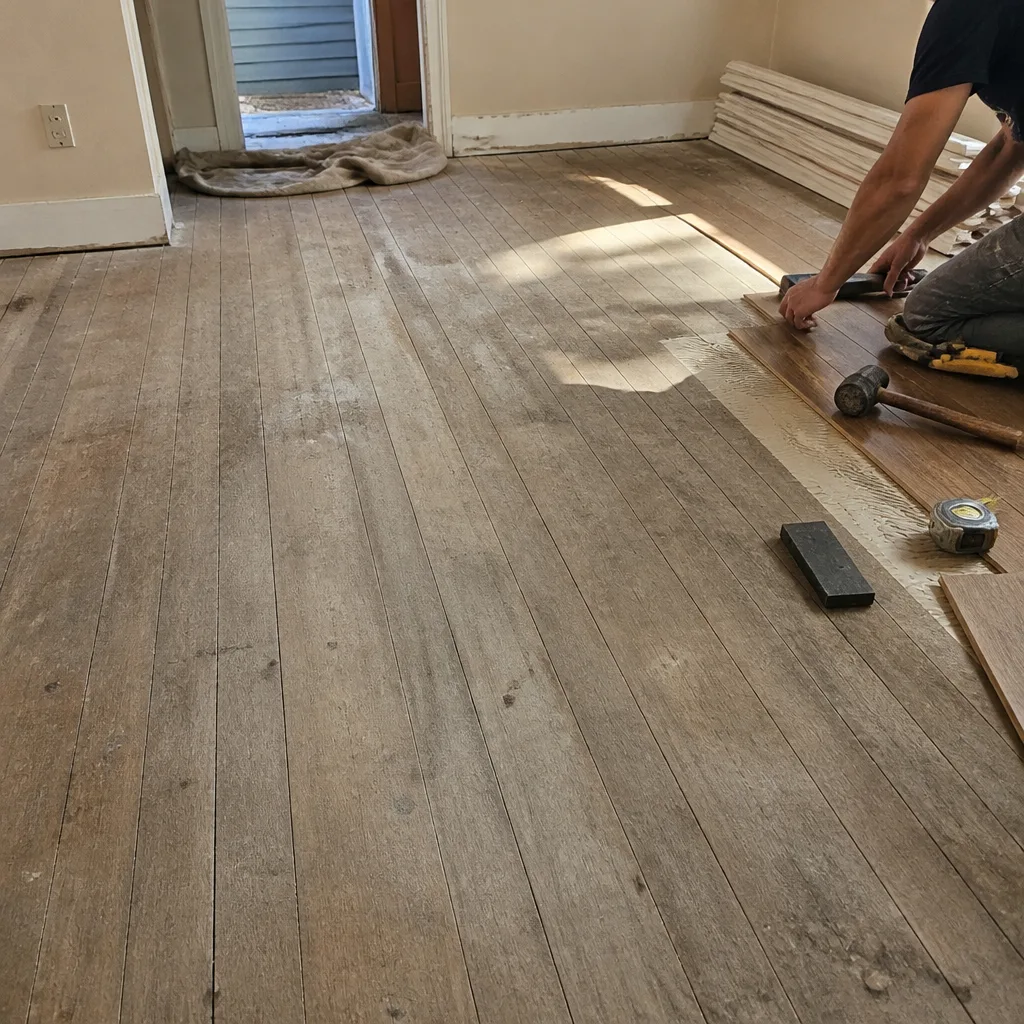 Before
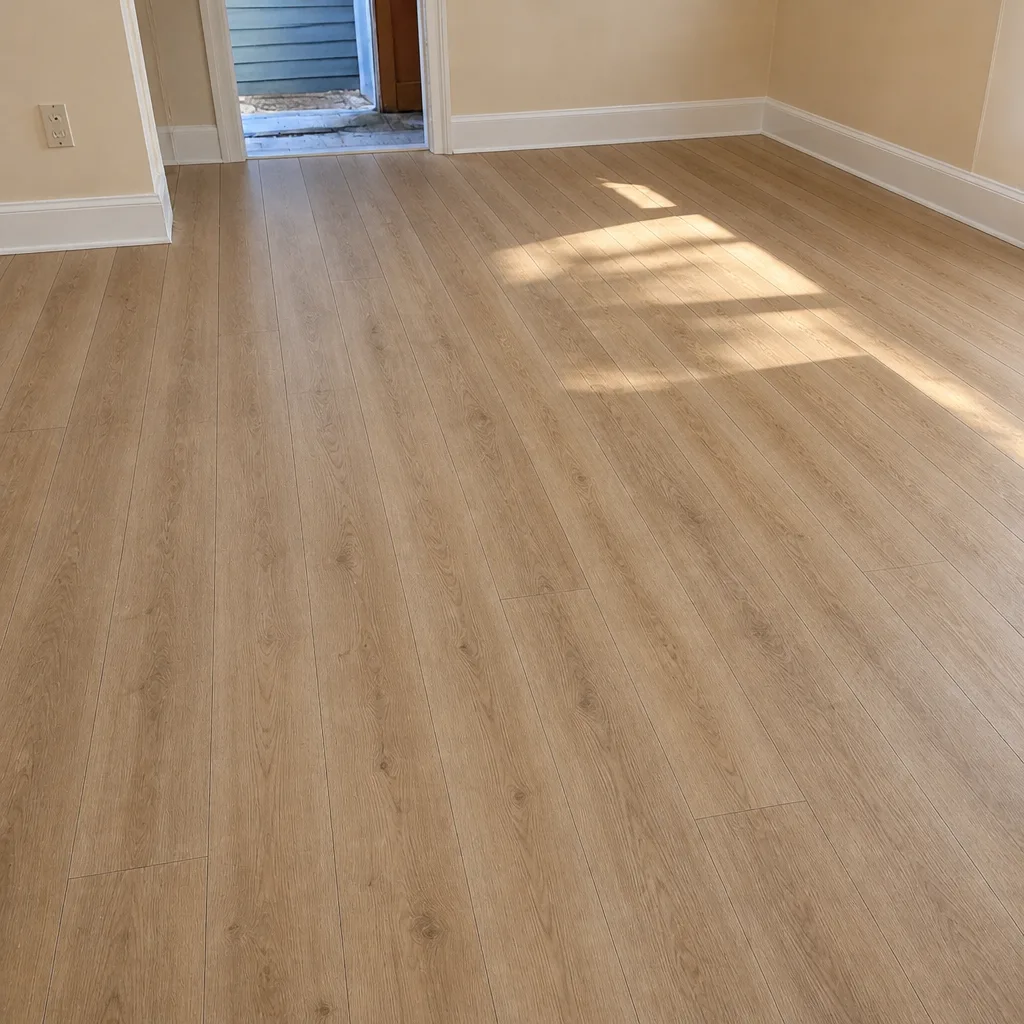 After
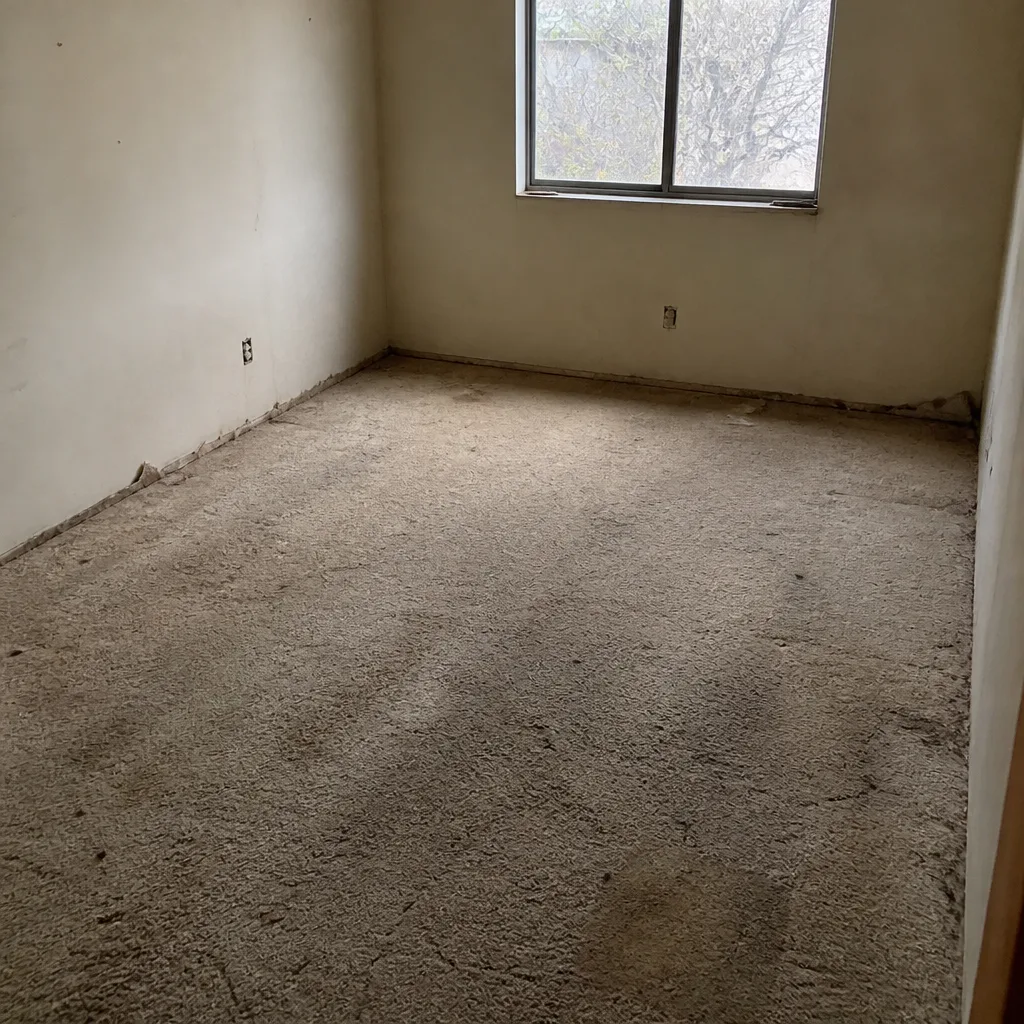 Before
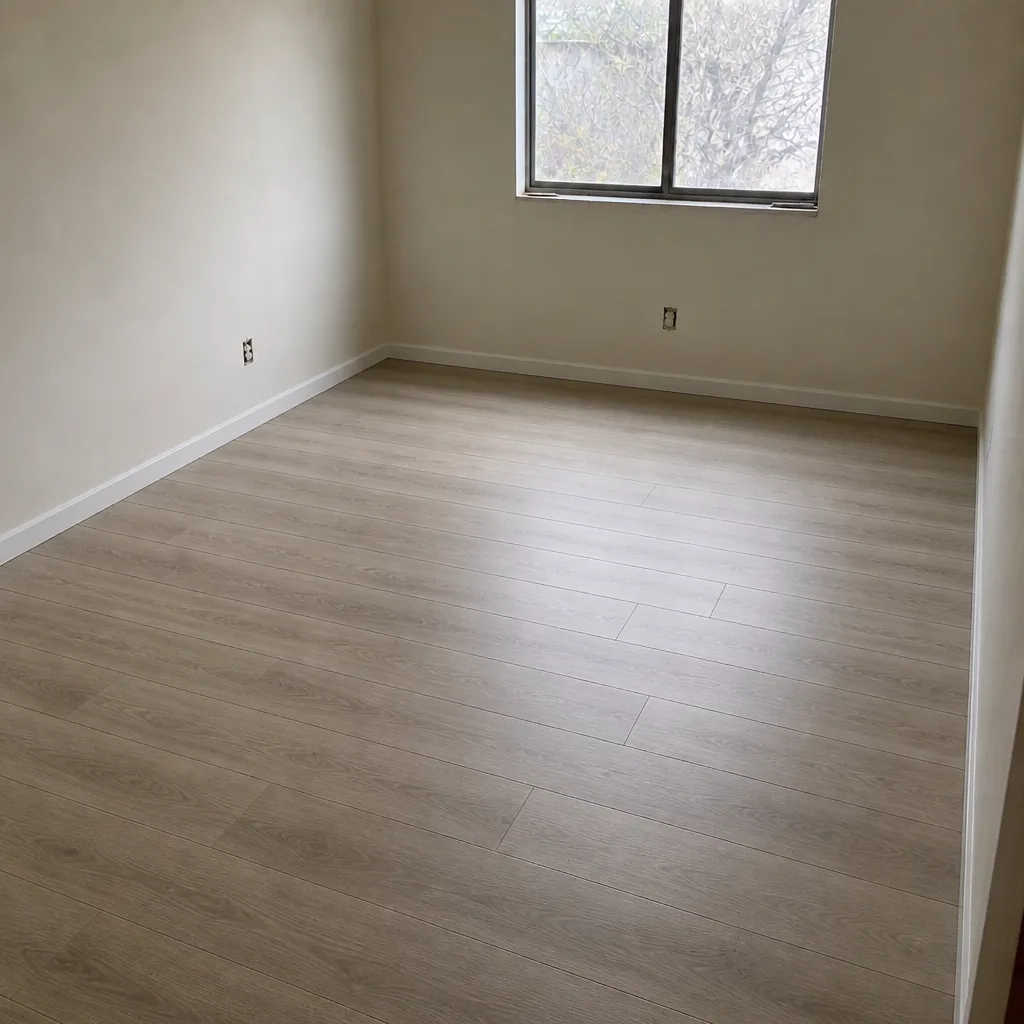 After
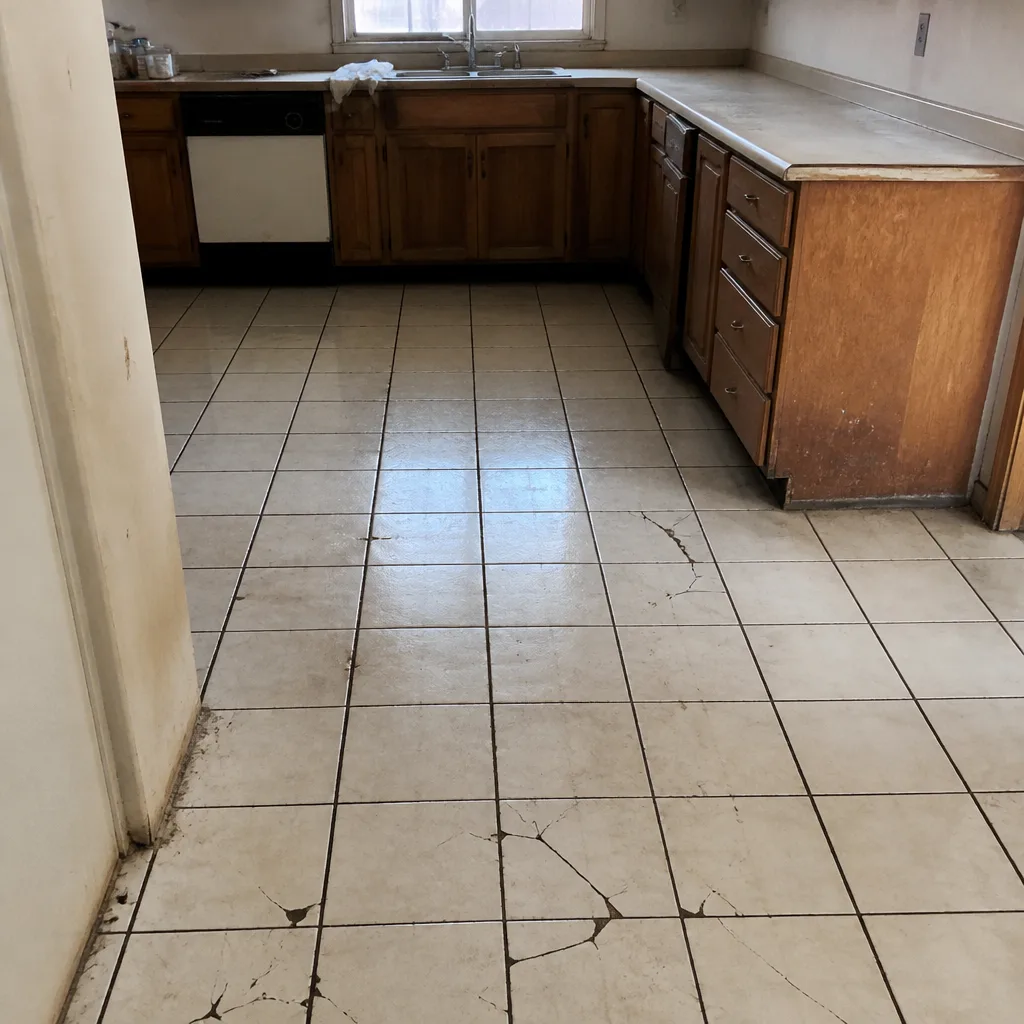 Before
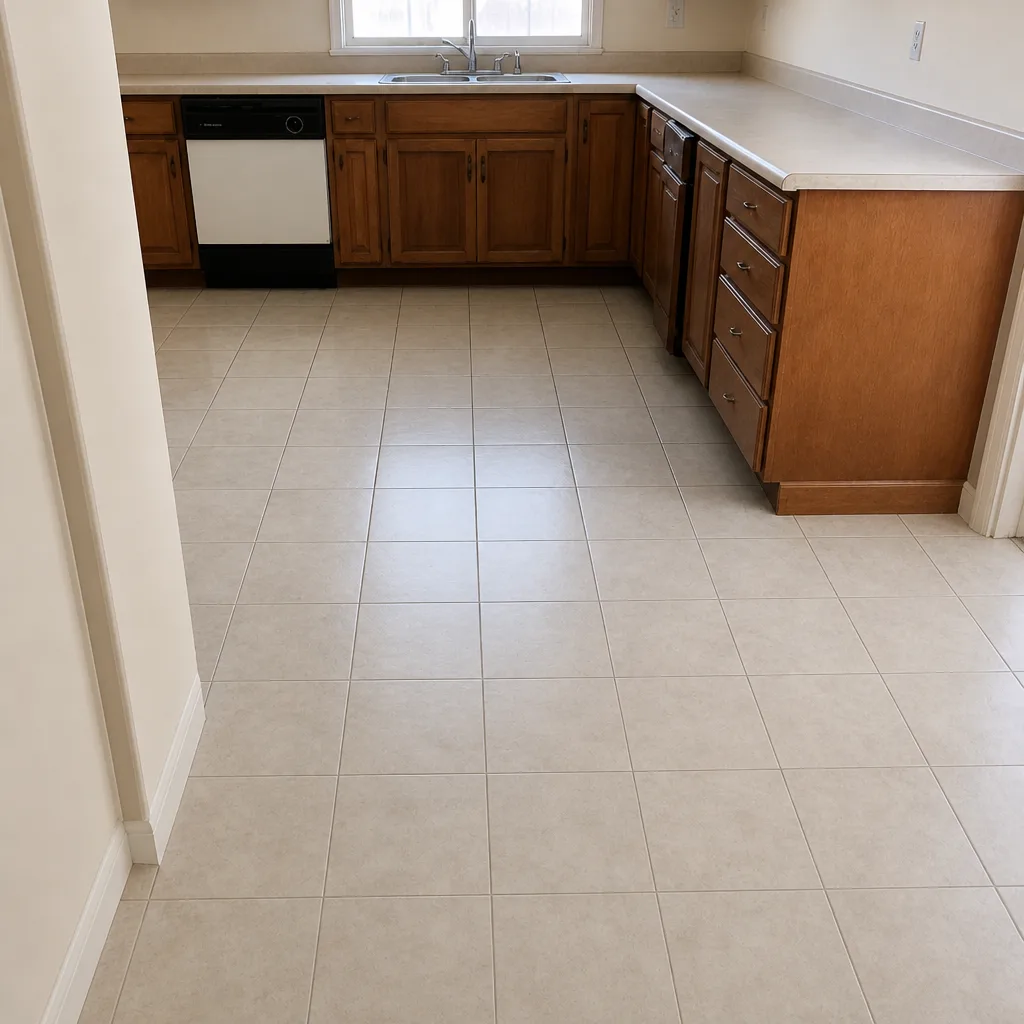 After
When to Call a Professional
Some flooring decisions are safe to make on your own. Most aren’t. Call a professional if the floor is being installed over concrete, if the existing floor includes significant damage or uncertain age, if you’re refinishing hardwood and don’t know its thickness, or if the job involves more than one surface type under one contract. Call a professional if a prior installer’s work is now failing at the edges or grout lines. Call a professional before you buy material, not after, because the right product depends on the room. We’ve seen homeowners save money by letting the installer direct the product selection before the purchase. The wrong product chosen first is an expensive correction. Paradise Flooring Installation offers free estimates in Paradise – call (844) 651-6528.
Frequently Asked Questions
Flooring installation pricing in Paradise depends on the material, the square footage, the current condition of the subfloor, and whether prep work is needed. We don’t quote over the phone, because a real number requires seeing the floor. We give a free written estimate on site, and the written estimate sets the final price. Call (844) 651-6528 for an exact quote – estimates are free.
Yes. Flooring installation in Nevada requires the C-15 Floor Covering classification through the State Contractors Board. Verify the company’s license number and classification at the board’s public lookup before you hire. A license from another state or another trade classification does not qualify.
Yes, in most cases. Installing over concrete requires moisture testing and the right product for the slab condition. Nail-down hardwood may not be the right choice over a slab; glue-down, floating engineered wood, or a premium resilient plank like COREtec may be. The estimate visit will tell us which option works for your floor.
The schedule depends on the material, the square footage, the number of rooms, and any subfloor prep that comes up. We set the install schedule at the estimate visit, in writing, before the job is booked, so you know what to expect. It’s a scheduled job, not a drop-in visit.
Often, yes. Refinishing is a valid option if the wood is thick enough and in sound condition. That’s determined at the estimate visit, when we check the condition and thickness of the existing floor. If refinishing isn’t possible, we’ll explain why and price out the replacement alternatives.
Using one company for all three eliminates the coordination problem of three different contractors on one project timeline. You get one estimate, one schedule, and one point of contact for the whole job. If the floor plan includes carpet in the bedrooms and tile in the baths alongside hardwood, a multi-surface installer is the simpler path.
A well-written contract covers this. The change order clause should state that any discovery of subfloor damage is documented, priced separately, and approved in writing before work continues. If a contractor won’t agree to that clause before signing, that’s a reason to walk.
Yes. The estimate and the on-site evaluation are free. The written estimate sets the final price for the agreed scope, and any change discovered during the job is handled separately with a written change order. Call (844) 651-6528 to schedule your free estimate.
The Bottom Line
Hiring a flooring contractor in Paradise is a vetting process, not a price comparison. Verify the C-15 license in two minutes. Ask material-specific questions that match the product you’re buying. Insist on subfloor prep as a line item in writing. Find out who actually installs the floor, and check recent local references. Lock in a change order process so mid-install surprises stay on paper. Compare bids on scope, not just total. And check whether refinishing is an option before you assume the old wood floor has to go. Apply that process and the contractor you hire will be the right fit for your floor, your subfloor, and your home. When you’re ready to schedule, call (844) 651-6528 for a free estimate. You can also explore the broader guide to Paradise for context on the neighborhoods we work in.
Written by the team at Paradise Flooring Installation.